





Temperature stability
Dual boiler holds brew temperature independent of steam demand. HX machines can drift slightly during heavy steaming, though a well-maintained HX machine recovers quickly.
Buying Guides · Commercial Espresso Machines
Two boiler systems power almost every commercial espresso machine on the market, and the choice between them affects everything from your morning steam capacity to your energy bill. Here's exactly how a heat exchanger (HX) boiler differs from a true dual boiler system, which one suits your venue, and real examples of each from brands we carry.
A heat exchanger (HX) machine runs on a single boiler filled with water for steam, held at a high temperature and pressure. Running through that same boiler is a separate coiled pipe — the "exchanger" — that fresh, cooler brew water passes through on its way to the group head. As it travels through the coil, the brew water picks up heat from the surrounding steam water without the two ever actually mixing. One boiler, two jobs, done through thermal transfer rather than two separate heating systems.
It's a proven, mechanically simpler design that's been the backbone of commercial espresso machines for decades — many of the machines we carry from Expobar, Astoria, and CIME are built this way. The tradeoff is that brew temperature is tied to the steam boiler's temperature, so a barista pulling shots right after steaming a large batch of milk may notice some temperature drift until the machine settles.
A true dual boiler machine, as the name suggests, uses two completely separate boilers — one dedicated to steam, one dedicated to brewing — each with its own independent temperature control. Because the brew boiler never has to share heat with the steam side, temperature stability is genuinely tighter, shot after shot, regardless of how much steaming is happening elsewhere on the machine.
On multi-group machines, this often goes a step further: each group head gets its own dedicated brew boiler, so you can dial in slightly different temperatures for different beans running through different groups at the same time. It's the design behind flagship platforms like La Marzocco's Linea PB and GB5, and it's why dual boiler machines tend to sit at a higher price point — more boilers, more insulation, more electronics to control them independently.
Dual boiler holds brew temperature independent of steam demand. HX machines can drift slightly during heavy steaming, though a well-maintained HX machine recovers quickly.
Both designs can deliver strong steam; some HX machines dedicate their entire boiler to steam duty, which can mean genuinely high steam capacity for milk-heavy menus.
A single-boiler HX system generally uses less energy to maintain than heating and insulating two separate boilers, though the gap varies by machine and group count.
HX machines are typically simpler internally, which can mean a smaller footprint and fewer components to service over the machine's life.
For most cafes running a steady, moderate volume, a well-built heat exchanger machine delivers excellent, consistent espresso at a lower entry price and running cost — it's the workhorse choice, and it's why HX machines make up a large share of what we supply to boutique cafes and restaurants.
If your venue runs high, sustained volume across multiple groups, serves a wide variety of beans that each want a slightly different brew temperature, or you simply want the tightest possible shot-to-shot consistency a machine can offer, a dual boiler platform is worth the extra investment. It's also the more common choice for specialty roasters and competition-focused bars, where dialing in precise, independently-controlled brew temperature genuinely matters.
Budget matters too, and not just at purchase — think through the full picture before deciding. A dual boiler machine typically costs more upfront and draws more power day to day, but it can reduce the guesswork (and the coffee waste) that comes from chasing a moving brew temperature during a rush. If you're weighing new against pre-owned, it's also worth knowing that both boiler types show up regularly in our refurbished and pre-owned inventory, so a dual boiler platform doesn't always have to mean paying full new-machine price.
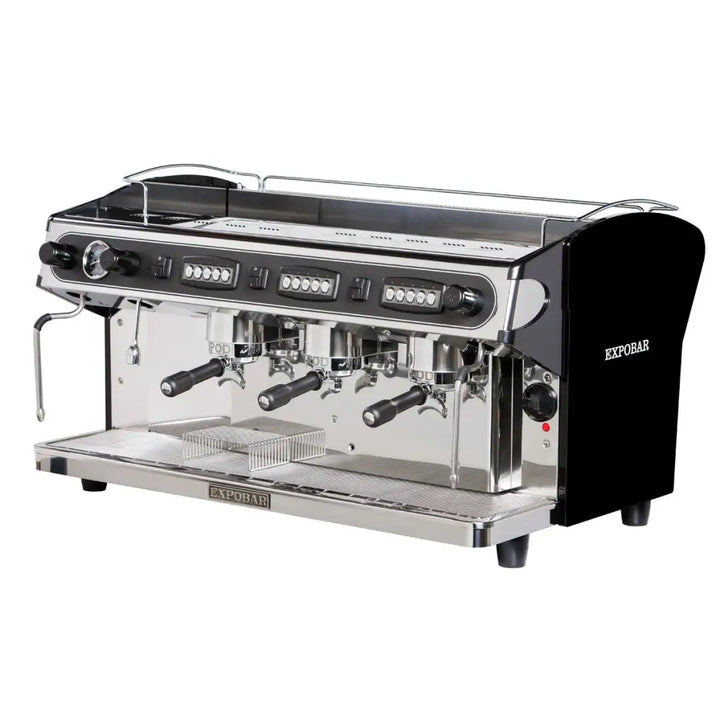
Copper HX boiler · heat exchanger per group · 2 or 3 group
The Rafael pairs programmable volumetric dosing with a manual override switch on every group, so a barista can pull a shot by hand whenever they want direct control. An 11.5L copper boiler with a heat exchanger per group keeps performance dependable through a full service.
Best for: cafes and restaurants that want dependable, no-frills HX performance.
View & Buy →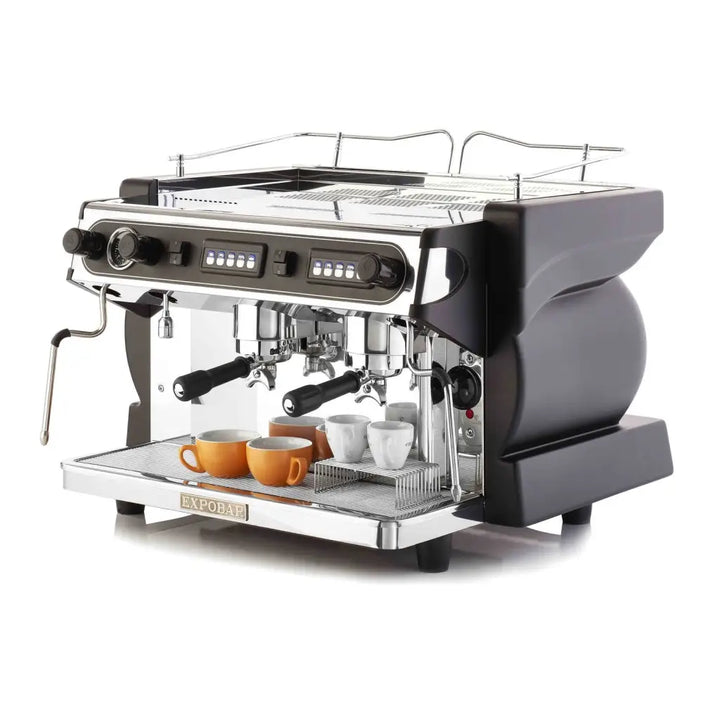
Copper HX boiler · optional multiboiler upgrade · 2 or 3 group
The Alfa Ruggero starts as a genuine HX machine with a fiberglass body custom-painted to your chosen color, then offers a real step up: an optional multiboiler configuration that adds independent brew-side temperature control for venues that want more precision without a full dual boiler platform.
Best for: venues that want a distinctive look with room to upgrade later.
View & Buy →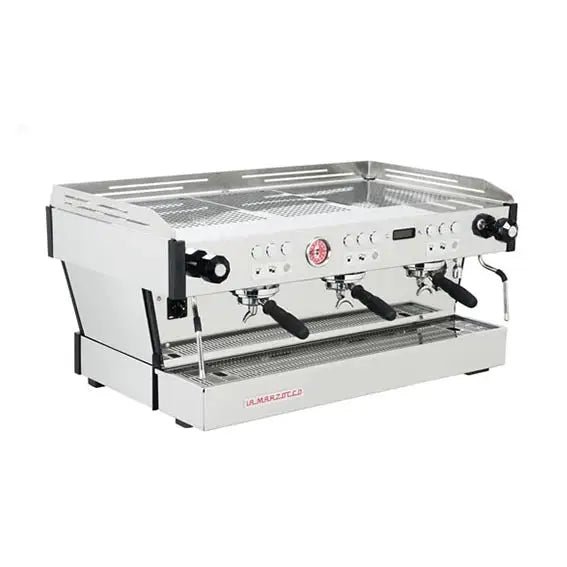
True dual boiler · saturated groups · PID accurate to ±0.5°C · 2, 3, or 4 group
A modern evolution of the iconic Linea Classic, the Linea PB pairs saturated groups and a genuine dual boiler system with an electronic display, dual PID, and shot timers — PID temperature control holds brewing temperature within half a degree Celsius, shot after shot.
Best for: specialty cafes that want proven, precise dual boiler performance.
View & Buy →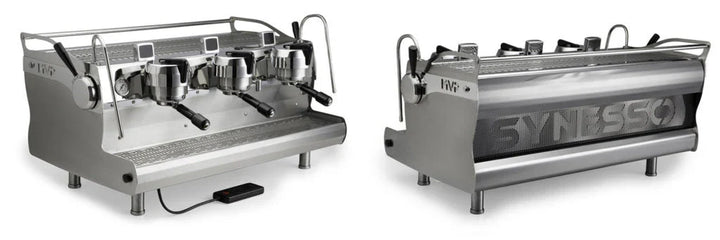
Independent brew & steam tanks per group · single or three-phase wiring (3 group) · 2 or 3 group
The Synesso MVP gives every group its own independent brew and steam tank, so thermal performance stays stable under real, sustained service pressure. The 3-group configuration can be wired single-phase or three-phase, matching your venue's existing electrical setup rather than forcing a rewire.
Best for: high-volume bars that want serious, sustained thermal performance.
View & Buy →Our team can talk through your daily volume, menu, and space before you buy.
Shop Commercial Machines Get Expert Advice| Machine | Boiler system | Groups | Best for | |
|---|---|---|---|---|
| Expobar Rafael | Heat exchanger | 2–3 | Dependable everyday HX performance | View → |
| Expobar Alfa Ruggero | HX, multiboiler optional | 2–3 | Custom finish with an upgrade path | View → |
| La Marzocco Linea PB | True dual boiler | 2–4 | Precision temperature control | View → |
| Synesso MVP | Independent tanks per group | 2–3 | High-volume, sustained service | View → |
Neither is universally "better" — it depends on your venue. A heat exchanger machine gives most cafes excellent, reliable espresso at a lower cost. A dual boiler platform is worth the investment if you run high, sustained volume or want the tightest possible brew temperature consistency across multiple groups.
Yes — a well-built HX machine like the Expobar Rafael handles steady, moderate-to-high volume comfortably. The main difference shows up during heavy, sustained steaming, where a dual boiler's independent brew temperature has a slight edge in staying perfectly stable.
Generally, yes — maintaining two independently heated and insulated boilers uses more energy than a single HX boiler. The gap varies by machine and group count, and it's worth weighing against the temperature-stability benefit for your specific menu and volume.
Some HX machines offer this as a built-in option — the Expobar Alfa Ruggero, for example, has an optional multiboiler configuration that adds real independent brew-side temperature control. It's worth asking about when you're comparing machines rather than assuming you're locked into one path.