





58mm
The commercial standard and the size used by most prosumer and cafe machines. The widest choice of baskets, tampers and distribution tools by a large margin. If you are buying accessories, this is the size the market is built around.

Home › Guides › Portafilters Explained
Barista Guide · Accessories
The portafilter is the most handled part of an espresso machine and the least understood. This guide covers sizes, group fit, spouted versus bottomless, why the basket matters more than the handle, and how to work out which one your machine actually takes.
The portafilter is the handle you lock into the group head, and it does more than hold coffee. It holds the basket, it seals against the group gasket so the pump can build pressure, and it holds a mass of metal that stabilizes temperature at the exact moment water hits the puck. A cold, light portafilter pulls heat out of the first few seconds of a shot; a heavy, preheated one does not.
That is why baristas leave the handle locked into the group between shots. It is also why a heavier aftermarket handle is a real upgrade on some machines rather than a cosmetic one. Everything in this guide comes back to three things: fit, basket, and mass. Browse the full portafilter and group handle range as you read.
Portafilter size refers to the basket diameter, and it is the one specification you cannot compromise on. The wrong size will not seat, or will seat badly and leak.
The commercial standard and the size used by most prosumer and cafe machines. The widest choice of baskets, tampers and distribution tools by a large margin. If you are buying accessories, this is the size the market is built around.
Common on compact consumer machines. Fewer accessory options, though the range has grown a lot. Check the exact figure for your model — some are 53.x or 54.x rather than a round number.
Found on entry-level and some vintage machines. Workable, but accessory choice is limited and baskets are usually machine-specific.
Two machines can both take a 58mm basket and still need different handles. The lugs — the ears that twist into the group — are cut to a specific group design, and the pattern varies by manufacturer. An E61 group handle will not lock into a Marzocco-pattern group even though the basket is the same diameter.
So there are two questions, not one: what basket size does my machine take, and what group pattern does it use? The common patterns you will see across our range include E61-group handles (used across a very large number of Italian machines), plus manufacturer-specific patterns for La Marzocco, Rancilio, Nuova Simonelli, Iberital, Expobar, Astoria and others.
If you are not sure which your machine uses, tell us the make and model through the contact page and we will confirm before you order. This is the single most common reason an accessory gets returned.
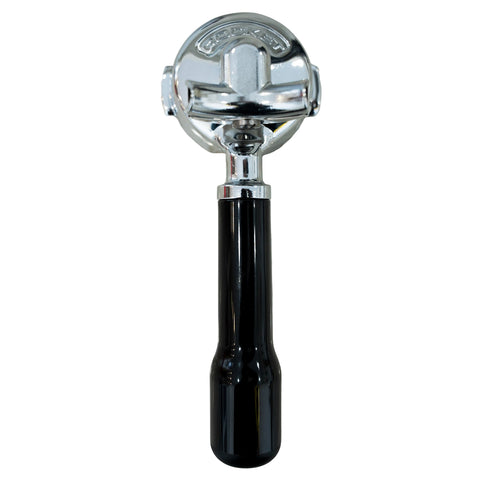
Spouted · genuine part · E61-pattern group
A genuine manufacturer handle is the safe answer when you are replacing rather than upgrading: the lug pattern, the basket seat and the spout alignment are all exactly what the machine was built around. No adapter, no guessing.
Best for: Anyone replacing a worn or damaged original handle.
View & Buy →A spouted handle channels the shot down through one or two spouts. A bottomless (or naked) handle has the base machined away so you see the underside of the basket while the shot runs.
Spouted is the practical choice for a cafe bar, because you can split a double into two cups and the spouts keep splashing contained. Bottomless is the diagnostic choice: it shows you exactly how evenly the puck is extracting, and it is the fastest way to learn distribution and tamping. Most home baristas end up owning both.
The full case for going bottomless — including what the spray patterns actually mean — is in our bottomless portafilter guide.
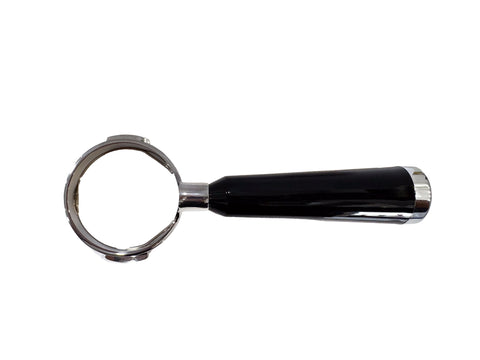
Bottomless · open base · shows extraction
A bottomless handle removes the spouts and the base so the basket is visible from underneath. Within a week of using one, most people fix distribution problems they did not know they had, because channeling is impossible to miss when you can see it.
Best for: Home baristas working on consistency, and anyone dialling in a new grinder.
View & Buy →Send us your make and model and we will confirm the size and group pattern before you order.
Shop Portafilters Get Expert AdviceHere is the part most upgrade guides skip. The handle holds the coffee; the basket shapes the extraction. Hole pattern, hole size, wall taper and total open area all change how evenly water moves through the puck, and a precision-machined basket in a cheap handle will outperform a stock basket in an expensive one.
Baskets are also sized by dose, not just diameter: singles, doubles and triples are different depths for different weights of coffee. Using a dose the basket was not designed for is a common cause of thin, fast shots — the puck sits too far from the shower screen and water finds the edges.
If you are upgrading anything, upgrade the basket first. Browse portafilter baskets, and weigh your dose with a coffee scale so you actually know what the basket is being asked to hold.
Aftermarket handles come in a wide spread of weights and materials, and the differences are real but smaller than the marketing suggests. More mass means more thermal stability and a more planted feel when you tamp, at the cost of wrist fatigue over a long service. Wood handles stay cooler to the touch than metal ones. Coated finishes look excellent and show scratches faster than bare stainless.
What actually matters day to day: does it lock in without fighting you, does the spout height clear your cups, and does the handle stay comfortable when it has been sitting in a hot group for two hours.
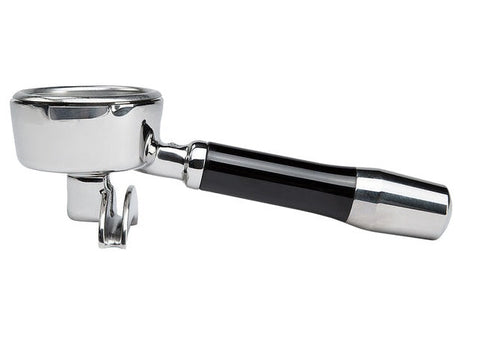
Spouted · angled body · genuine part
An angled body changes where the spouts sit relative to the group, which matters more than it sounds when you are pouring into taller cups or working under a low group. Genuine fit, conventional double spout.
Best for: Home setups where cup clearance under the group is tight.
View & Buy →Portafilters need the same weekly attention as the machine. Soak the metal parts — not the plastic or wood handle — in a solution of espresso machine cleaner to strip the coffee oils, then scrub the basket seat and rinse thoroughly. Our cleaning guide covers the full routine, and cleaning products covers what to use.
Replace when the lugs are visibly worn or rounded, when the handle no longer locks to roughly the same position it used to, or when the basket seat has been scored. A handle that keeps creeping further round is usually a gasket problem first and a wear problem second — check the group gasket before you buy a new handle.
Portafilter size refers to the basket diameter, and it has to match your machine exactly. 58mm is the commercial and prosumer standard with by far the widest accessory choice; 54mm is common on compact consumer machines; 51mm and smaller appear on entry-level and vintage machines. Check your manual, and note that size alone is not enough - the lug pattern that locks into the group also has to match.
A spouted portafilter channels the shot through one or two spouts, which lets you split a double into two cups and keeps splashing contained. A bottomless (naked) portafilter has the base machined away so you can watch the underside of the basket while the shot runs, which shows you immediately whether the puck is extracting evenly. Spouted suits cafe service; bottomless is the better learning tool.
No. The basket diameter and the group lug pattern are two separate things. An E61-pattern handle will not lock into a La Marzocco group even though both take a 58mm basket. Always match both the size and the group pattern, or send us your make and model and we will confirm the right handle before you order.
It depends what you are fixing. A heavier handle adds thermal stability and a more planted tamp, which is a genuine but modest improvement. A precision basket changes extraction far more for far less money. If you are upgrading one thing, upgrade the basket first, then consider a bottomless handle to see what the basket is doing.