



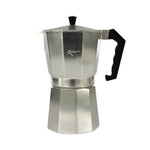


Flat
The default and the right answer for most people. Produces an even puck surface across the whole basket, and it is the easiest shape to keep level because you can feel when it seats. Nearly every competition and cafe tamper is flat.

Home › Guides › Espresso Tampers
Barista Guide · Accessories
Most tamping advice is wrong, starting with the 30-pound rule. This guide covers how to size a tamper to your basket, why flat beats convex for most people, how hard you should actually press, and why distribution matters more than the tamp itself.
Tamping does one job: it turns a loose pile of grounds into a uniform puck so that pressurized water meets the same resistance everywhere. That is it. It is not about compressing the coffee as hard as possible, and it is not adding flavor. It is about making the puck consistent so water cannot find a shortcut.
Understanding that reframes every decision below. The best tamper is the one that most reliably produces a level, evenly compressed puck in your hands — not the heaviest, not the most expensive. Browse the full tamper range as you read.
A tamper needs to match your basket, and "58mm" is a category rather than a measurement. Most 58mm baskets are actually tamped best with a base around 58.4mm or 58.5mm, because a base that is genuinely 58.0mm leaves an untamped ring of grounds around the edge — and that ring is exactly where channeling starts.
Too large is worse than too small: a base that binds against the basket wall will not seat flat, and you will feel it fight you every time. The practical rule is to use the largest base that still moves freely in your basket, which for most 58mm baskets means a 58.4mm or 58.5mm tamper.
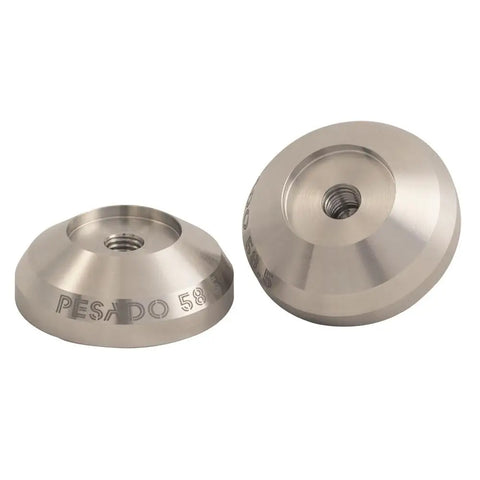
58.5mm · precision base · fits standard 58mm baskets
A base machined to sit just under the basket wall rather than at the nominal size, which is what eliminates the untamped edge ring. If your current tamper leaves a visible rim of loose grounds after tamping, this is the fix.
Best for: Anyone tamping in a standard 58mm basket who sees an untamped rim.
View & Buy →The default and the right answer for most people. Produces an even puck surface across the whole basket, and it is the easiest shape to keep level because you can feel when it seats. Nearly every competition and cafe tamper is flat.
A slight dome that compresses the center marginally more than the edges. The argument is that it compensates for edge channeling. In practice the difference is small and it is harder to judge levelness by feel.
Textured bases that leave a pattern in the puck, intended to increase surface area. Interesting, and a matter of preference rather than a proven improvement.
If you are buying your first proper tamper, buy flat. Come back to the others once your distribution is already consistent — otherwise you will be changing two variables at once and learning nothing.

Flat base · 58mm class · barista-grade build
Pullman tampers are a fixture behind serious bars for a simple reason: the base is precisely machined and flat, the weight is balanced in the hand, and they hold up to years of service. This is the sensible endpoint rather than a stepping stone.
Best for: Home baristas who want to buy once, and cafes.
View & Buy →The old advice was 30 pounds of pressure, and it has done more damage than almost any other piece of espresso folklore. Above a fairly modest threshold, extra pressure changes very little about the puck's resistance — coffee stops compressing meaningfully — and it does a great deal to your wrist over a few hundred shots.
What actually matters is that the pressure is the same every time and applied straight down. A firm, level, repeatable press beats a heroic one. If you cannot repeat it, you have introduced a variable rather than removed one.
This is the argument for calibrated and spring-loaded tampers: they take the guesswork out by clicking or bottoming out at a fixed pressure, so every puck gets the same treatment regardless of who is making the coffee or how tired they are.
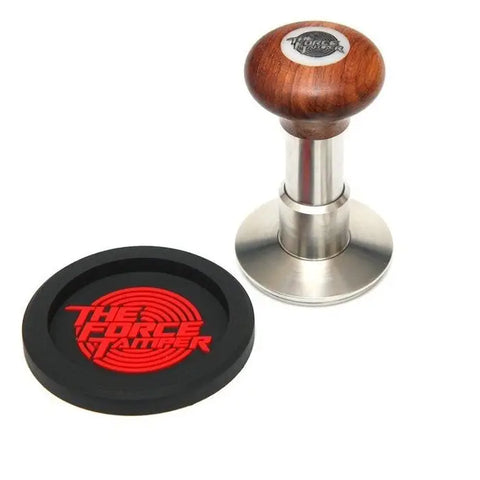
Calibrated · self-levelling · flat base
A calibrated tamper that delivers the same pressure every press and self-levels as it seats, which removes the two biggest sources of tamping inconsistency at once. If you have watched a bottomless shot spray on one side, this is the tool that fixes it.
Best for: Anyone whose shots vary for no obvious reason, and multi-barista setups.
View & Buy →Send us your machine and basket and we will confirm the right base size before you order.
Shop Tampers Get Expert AdviceHere is the thing that surprises people: most channeling blamed on tamping is actually a distribution problem. If the grounds are piled unevenly in the basket, no tamper on earth will fix it — you will simply compress an uneven pile into an uneven puck.
Distribution happens before the tamp. Level the grounds, break up clumps, and make sure the bed is even across the whole basket. You can do that with a simple tap and shake, with a fingertip technique, or with a dedicated distribution tool that rakes the bed flat before you press.
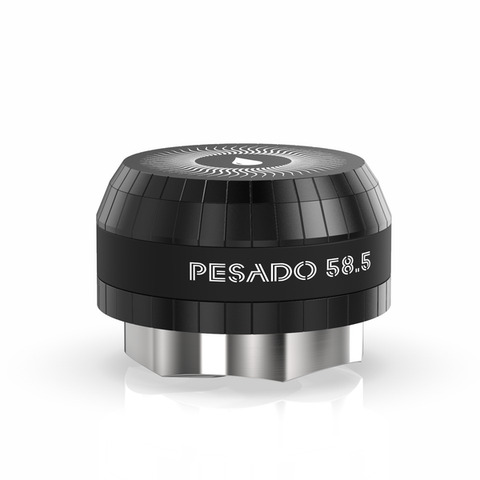
Distribution tool · 58.4mm · gravity mechanism
A distributor levels the coffee bed before the tamp, which is the step most home routines skip entirely. On setups where shots are inconsistent despite careful tamping, adding a distributor usually does more than upgrading the tamper would.
Best for: Anyone still seeing uneven extraction after fixing their tamp.
View & Buy →An automatic tamper presses the puck mechanically at a set depth and pressure. In a cafe pulling hundreds of shots a day, this is not a luxury — it is repetitive-strain prevention and consistency insurance, because it makes every barista's tamp identical.
For a home setup it is almost always more machine than the problem requires, and a calibrated hand tamper solves the same consistency issue for a fraction of the outlay. The exception is anyone with wrist or hand issues, where taking the physical press out of the routine is worth it on its own. Browse automatic tampers if that describes your situation.
The base does the work; the handle decides whether you enjoy using it. Wood stays cool and warms to the hand over time. Metal handles feel substantial and get cold. Composite handles are hard-wearing and light. Weight is personal — heavier tampers do some of the pressing for you, lighter ones give more feel.
Two practical checks before buying: does the handle shape suit your grip when you press straight down rather than at an angle, and is the tamper comfortable enough that you will actually use it properly on the tenth shot of the morning rather than the first.
A tamping mat or stand is a worthwhile addition here — it protects your bench, gives the portafilter a stable base to press against, and keeps the whole routine in one place. See tamper mats.
Match the tamper to your basket rather than to the machine. Most baskets described as 58mm are best tamped with a base around 58.4mm or 58.5mm, because a base at exactly 58.0mm leaves an untamped ring of grounds at the edge where channeling starts. Use the largest base that still moves freely in the basket, and re-check if you switch to a precision basket.
Flat is the better default and is what nearly every cafe and competition setup uses. It produces an even puck surface and is easier to keep level because you can feel when it seats. Convex bases compress the center slightly more than the edges, which some people prefer, but the difference is small and levelness is harder to judge. Start flat.
Far less hard than the old 30-pound advice suggests. Above a modest threshold, extra pressure barely changes the puck's resistance but does real damage to your wrist over hundreds of shots. What matters is that the pressure is the same every time and applied straight down. A calibrated or spring-loaded tamper removes the guesswork entirely.
Not necessarily, but most channeling blamed on tamping is actually a distribution problem - an unevenly piled bed simply becomes an unevenly compressed puck. You can distribute by hand with a tap and level, or use a dedicated distributor. If your shots are still inconsistent after fixing your tamp, a distributor usually helps more than a better tamper would.