





✓ Choose prosumer if you…
- Drink espresso or milk-based drinks daily
- Want a machine that will last 15+ years
- Are willing to learn barista technique
- Own (or plan to buy) a quality burr grinder
- Want the commercial accessory ecosystem
Buying Guide · Prosumer Espresso
Cafe-grade espresso belongs on your kitchen counter. We've ranked the best prosumer espresso machines for home in 2026 — every pick features commercial-grade components, an E61 or saturated brew group, PID temperature control, and the build quality to last 15+ years.
"Prosumer" blends "professional" and "consumer" — describing espresso machines that use commercial-grade components in a home form factor. These aren't kitchen appliances; they're scaled-down cafe machines built around the same fundamentals you'll find in a commercial La Marzocco Linea or a Slayer Steam.
A true prosumer machine in 2026 shares a common DNA: commercial-grade construction, a 58mm portafilter, a brass or stainless steel boiler, PID temperature control, and a brew group designed for thermal stability — usually the legendary E61 group head with its constant thermosyphon circulation.
What separates a prosumer machine from an entry-level home espresso machine isn't the marketing — it's the components. A prosumer machine uses the same 58mm group head found in commercial cafes, where a budget machine uses a smaller proprietary group with limited aftermarket support. Prosumer machines are part of an ecosystem: once you own one, an enormous library of professional accessories, baskets, and tools becomes available.
Prosumer machines aren't for everyone. They take longer to warm up (20–30 minutes for E61 thermal stability), demand a quality grinder, and reward practice. Here's how to decide.
Every prosumer machine in 2026 falls into one of three boiler categories. Understanding them is the most important buying decision you'll make.
| Architecture | How it works | Best for |
|---|---|---|
| Heat Exchanger (HX) | One boiler heats steam; a coil pulls brew water through | Compact kitchens, 2–4 drinks per session |
| Dual Boiler | Separate brew and steam boilers, independent PIDs | Daily multi-drink sessions, milk-heavy drinkers |
| Dual Boiler + Flow Control | Dual boilers plus a manual pressure-profiling paddle | Pressure-profiling experimentation, advanced users |
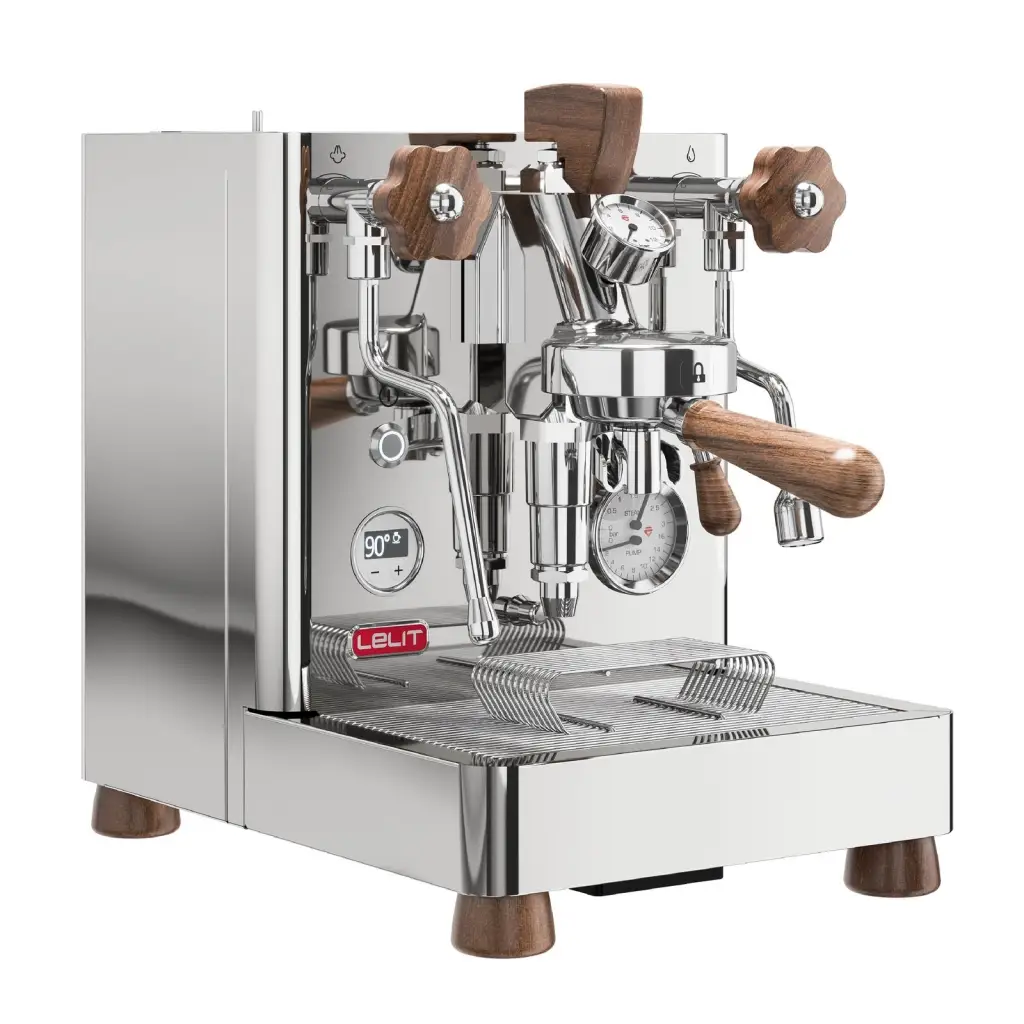
Dual boiler · E61 · rotary pump · manual flow control
The consensus #1 prosumer machine of 2026. The Bianca V3 brings pressure profiling — once a commercial-only feature — into a home machine. The wooden paddle on the E61 group head lets you manually control water flow during extraction, unlocking flavor profiles impossible on fixed-pressure machines.
Standout: dual stainless boilers, dual PID, flow-control paddle, rotary pump, reservoir + plumb-in, walnut accents, repositionable water tank.
Best for: experienced home baristas who want the closest thing to commercial-quality espresso at home. The forever machine.
View the Lelit Bianca V3 →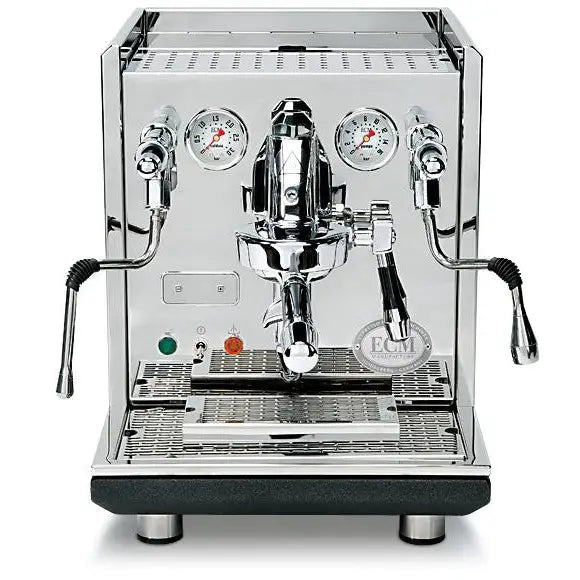
Dual boiler (0.75L brew + 2L steam) · E61 · rotary pump · dual PID
Handcrafted in Germany, the Synchronika V3 is a gold standard for premium prosumer espresso. A dual-boiler system with a near-silent rotary pump and dual PID delivers cafe-perfect shots and unlimited steam power, while fast heat-up technology shaves minutes off the morning workflow.
Standout: 58mm E61 group, rotary pump (plumb-in or 2.8L reservoir), polished stainless housing, dual-boiler PID, customizable shot timers, optional flow control add-on.
Best for: buyers who prioritize build quality and longevity above all. German engineering with a 15–20 year lifespan that holds resale value well.
View the ECM Synchronika V3 →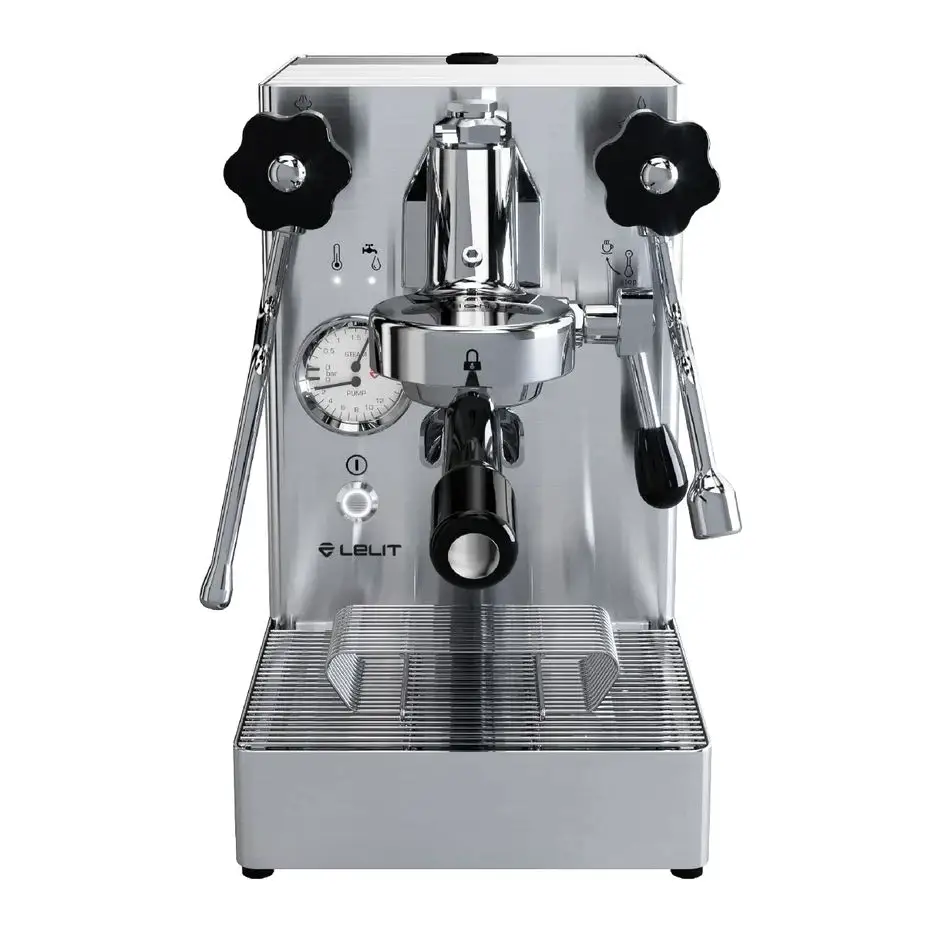
Heat exchanger · E61 · dual PID · compact footprint
The most popular prosumer entry point in 2026. The Mara X V2 brings true E61 group-head performance into a compact footprint — small enough for most kitchen counters but uncompromising on espresso quality. Dual PID temperature management with two probes delivers thermal stability that beats older HX designs.
Standout: E61 group, dual PID, 1.8L stainless HX boiler with thermosyphon, three temperature modes, near-silent operation, optional flow control paddle.
Best for: home baristas upgrading from entry-level machines who want simultaneous brewing and steaming without dual-boiler pricing or losing counter space.
View the Lelit Mara X V2 →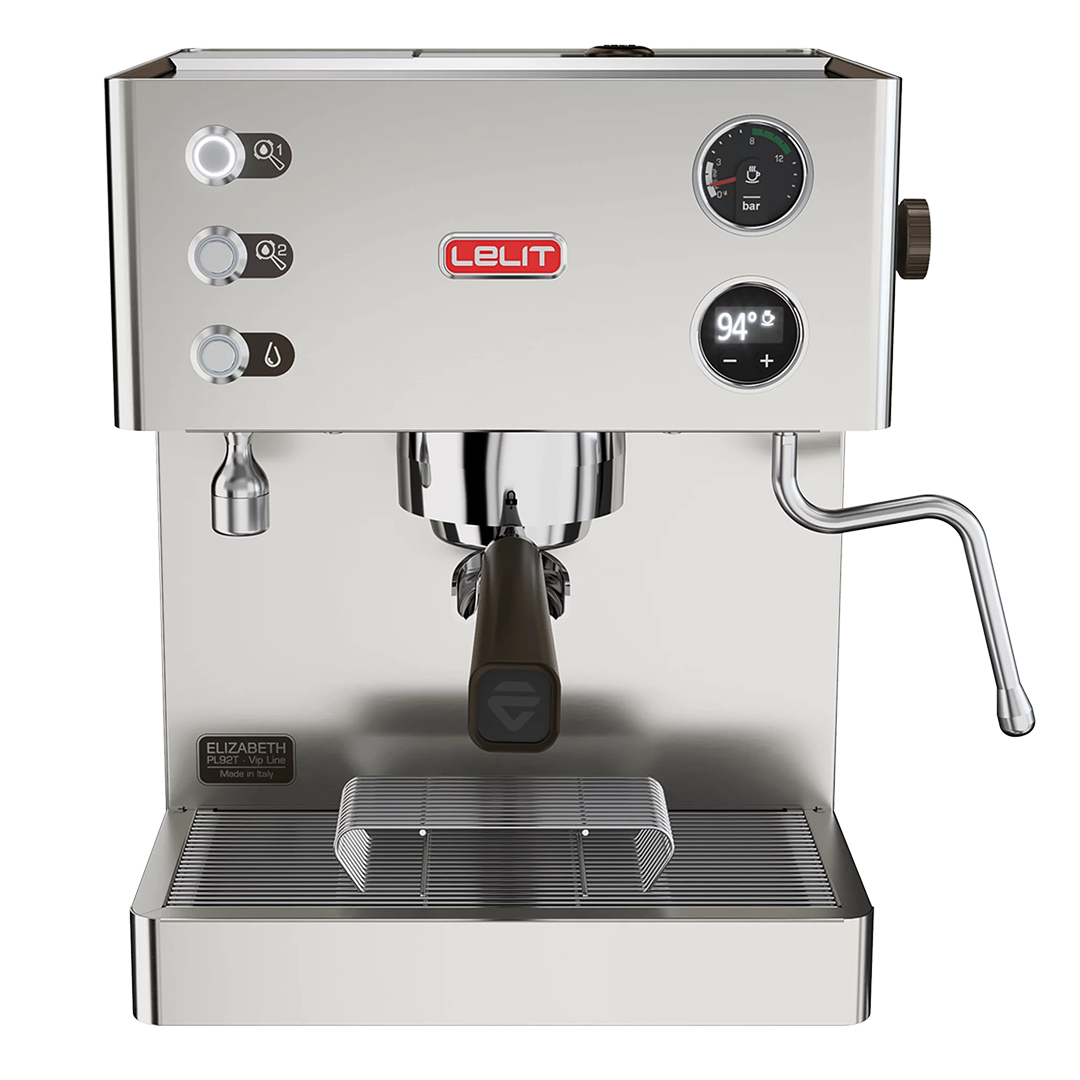
Dual boiler · saturated group · LCC display · programmable PID
The Elizabeth proves dual-boiler performance doesn't require a massive machine. Two independent boilers with programmable PID give you zero recovery wait between shots and steam, and the LCC (Lelit Control Center) provides commercial-style programmable pre-infusion, temperature control, and shot timing in a kitchen-friendly body.
Standout: dual stainless boilers, LCC programmable display, pre-infusion, brushed stainless build, quick heat-up, compact for a dual boiler.
Best for: buyers entering the dual-boiler world in a smaller footprint, with a modern feature set and excellent price-to-performance.
View the Lelit Elizabeth →
Heat exchanger · E61 · PID · ~1.7L copper boiler · plumb-in capable
Spanish-engineered with commercial DNA, Expobar is a name well known to cafe owners worldwide. The Crem ONE PID brings true commercial reliability into the home with a heat-exchanger boiler, PID temperature control, and a build quality that punches well above its class.
Standout: commercial-grade brew group, PID control, HX architecture for simultaneous brew and steam, durable stainless construction, easy to service.
Best for: former cafe owners and serious enthusiasts who want familiar commercial componentry.
View the Expobar Crem ONE →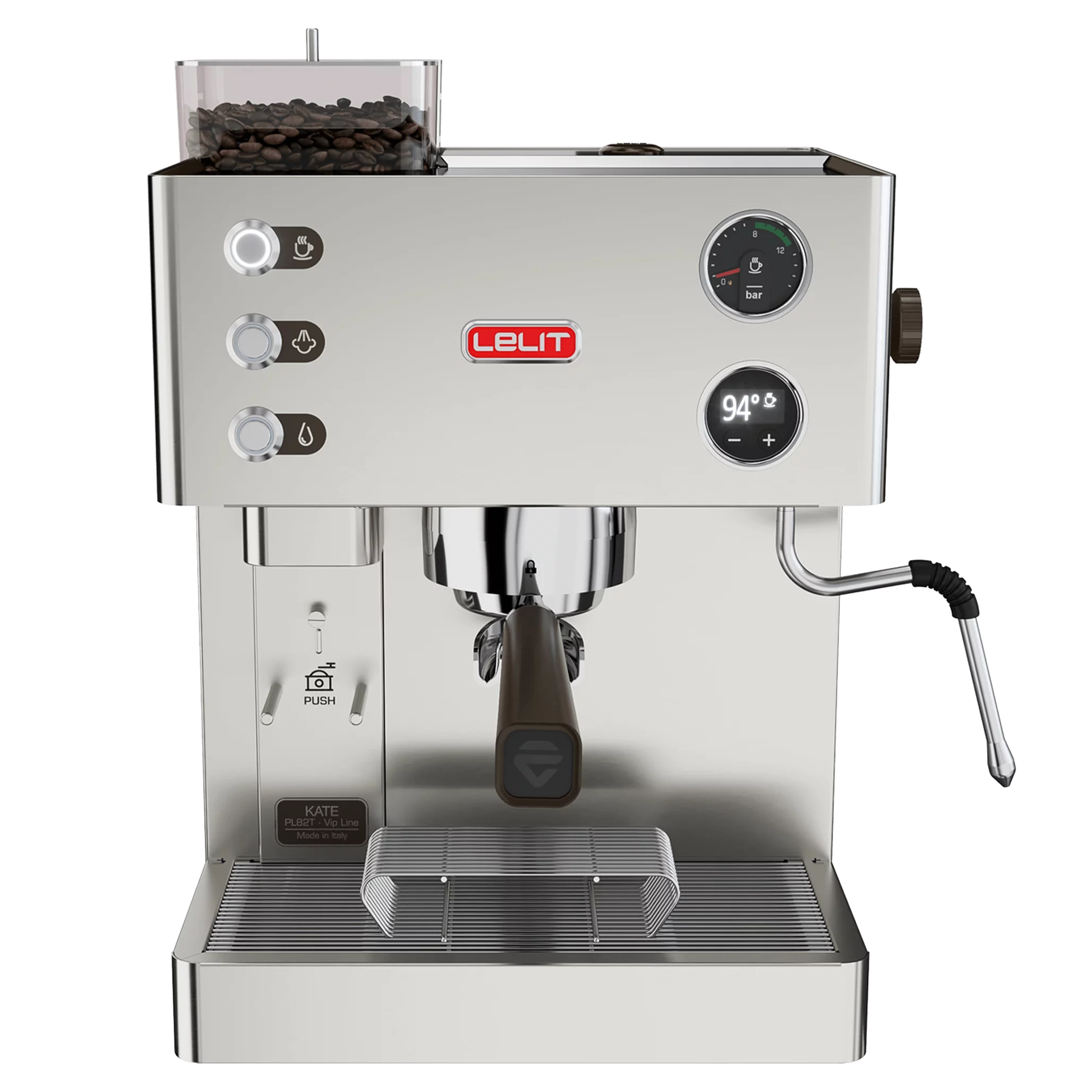
Dual boiler · saturated group · dual PID · space-saving footprint
For prosumer buyers with limited counter space, the Kate PL82T delivers true dual-boiler architecture in one of the smallest footprints in the category. Precise PID control on both boilers, brushed stainless construction, and Italian engineering combine in a machine that fits where most prosumer dual boilers can't.
Standout: dual boilers, precise PID, premium brushed steel, space-saving footprint, Italian build quality.
Best for: apartment kitchens and small counters that still want dual-boiler performance without the bulk.
View the Lelit Kate →Our specialists pull shots on these machines daily and can match one to your kitchen, your drinks, and your budget.
Shop Prosumer Machines Get Expert Advice| Machine | Boiler | Group head | Pump | Flow control |
|---|---|---|---|---|
| Lelit Bianca V3 | Dual | E61 | Rotary | Yes (manual) |
| ECM Synchronika V3 | Dual | E61 | Rotary | Optional |
| Lelit Mara X V2 | HX | E61 | Vibratory | Optional |
| Lelit Elizabeth PL92T | Dual | Saturated | Vibratory | No |
| Expobar Crem ONE | HX | E61 | Vibratory | No |
| Lelit Kate PL82T | Dual | Saturated | Vibratory | No |
The Lelit Bianca V3 PL162T is the consensus best prosumer espresso machine for home in 2026. It combines dual boilers, dual PID temperature control, a manual flow-control paddle for pressure profiling, a quiet rotary pump, and plumb-in capability — features previously found only on commercial machines. For buyers focused on build quality and longevity, the ECM Synchronika V3 is an equally strong choice.
Prosumer machines use commercial-grade components — a 58mm portafilter, E61 or saturated brew group, brass or stainless steel boilers, commercial pumps, and PID temperature control. Consumer machines use smaller proprietary portafilters (54mm or 53mm), thermoblock heaters, and vibratory pumps without temperature regulation. The difference shows in shot quality, consistency, and lifespan: prosumer machines last 15–20+ years; consumer machines typically last 3–5.
Dual boilers are technically superior — they hold separate temperatures for brewing and steaming, eliminating recovery wait between drinks. For households making four or more milk drinks back-to-back daily, a dual boiler (Elizabeth, Synchronika, Bianca, Kate) is the right choice. For one to three drinks per session, a quality heat exchanger like the Mara X delivers nearly identical shot quality in a smaller footprint.
The E61 group head is a brewing mechanism introduced in 1961, still the most popular design on prosumer machines because it works exceptionally well. It uses continuous thermosyphon circulation to keep the group at the same temperature as the boiler for thermal stability throughout the shot, offers natural low-pressure pre-infusion, and accepts a huge ecosystem of commercial accessories.
With proper maintenance — daily backflushing, periodic descaling or filtered water, and gasket replacement every one to two years — quality prosumer machines easily last 15 to 20 years. Many parts, including E61 group heads and brass boilers, are serviceable for the life of the machine.
Yes. A prosumer machine demands a quality burr grinder to perform at its potential. Plan to spend at least 25% of your machine budget on the grinder. Standout options include the Eureka Mignon Specialita, Mahlkonig grinders, and Mazzer models. Skip blade grinders entirely — they produce inconsistent particle sizes that ruin extraction.
Ready to upgrade? Browse the full lineup of prosumer home espresso machines and espresso grinders, explore finance options, or contact our team for a recommendation matched to your kitchen.